Rough, wild, isolated and lonely
Where the emerald isle meets the North Atlantic. I’ve heard so many stories of this coast, spoken about with reverence.
When I told people I wanted to sail west of Ireland, they looked at me in awe, and I took great pride in that. I set off with the intention of going round Ireland, but I didn’t really believe I’d make it all the way around, and I knew the decision would only be certain once I’d rounded Scotland.
After a year of sailing, my confidence in my competence had grown and I thought: well, if I can do the North Sea in November, why not try west of Ireland in midsummer? I’d known from the day I set off that I wanted to at least try, and let’s just say Ireland has lived up to its legend and humbled me with its difficulty.
Port Ellen to Port Rush
It was a cold, wet day when I finally left the Scottish islands, making the big decision to turn left or right. On a clear day, Ireland is just 20 nm from Islay, but today the visibility was poor.
The wind was light and, although I raised my sails, I spent the whole time with the motor on. Crossing the shipping channel in fog wasn’t exactly how I’d imagined it, huddled under the sprayhood to avoid the worst of the rain.
But at least I was moving again, and emotionally it felt like a big milestone. The trip was about 30nm and took me around eight hours. I arrived at 7:30 pm to find the only available spot on the small pontoon reserved for the lifeboat. Maybe I should have called ahead…
After chatting to the locals, the panic was resolved when one of the other vessels was just heading out. Once tied up alongside, I was able to relax and suddenly I got quite excited. I was in Ireland! It might not have been a long journey, but listening to the Derry accent felt pretty good.
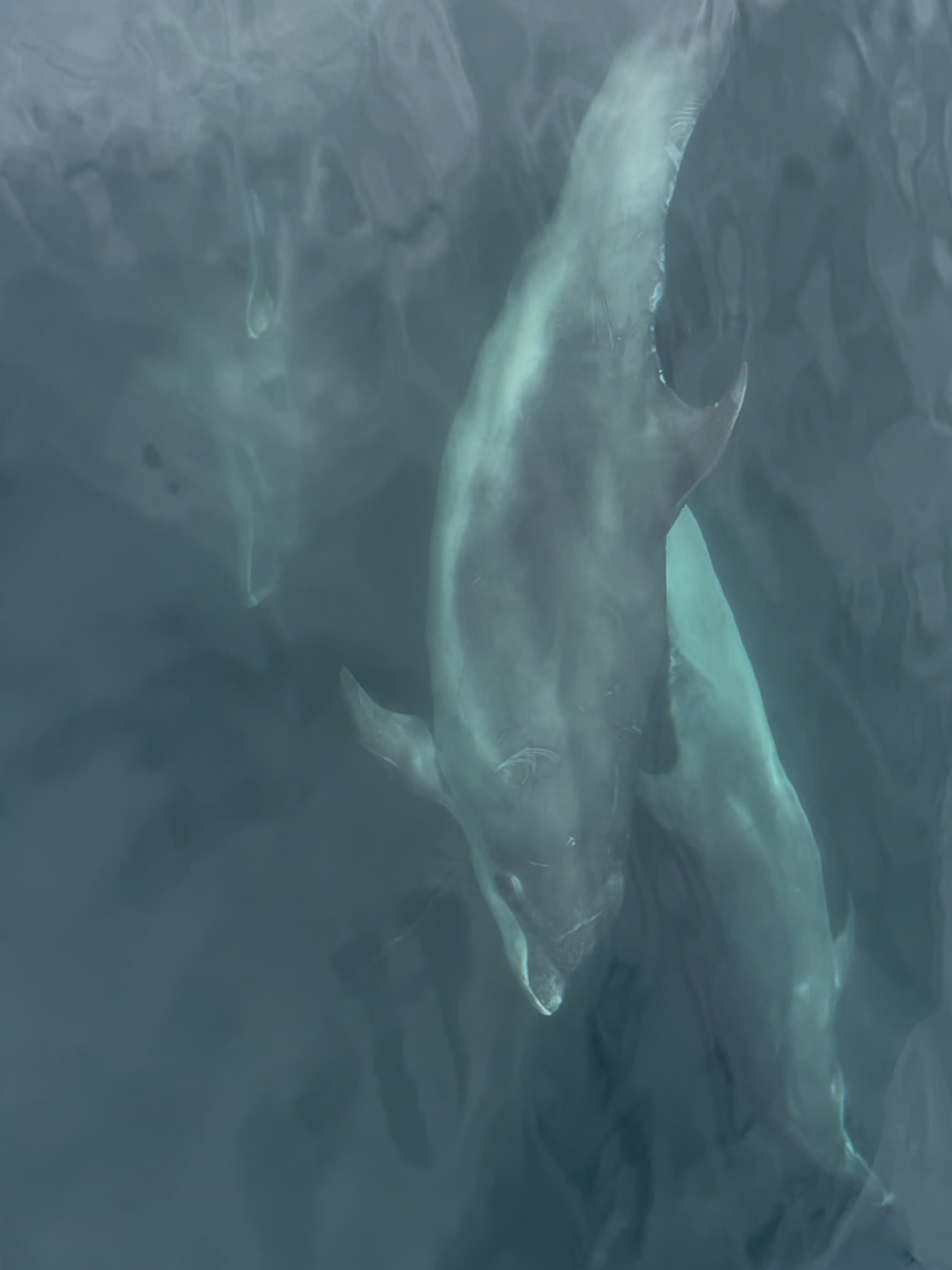
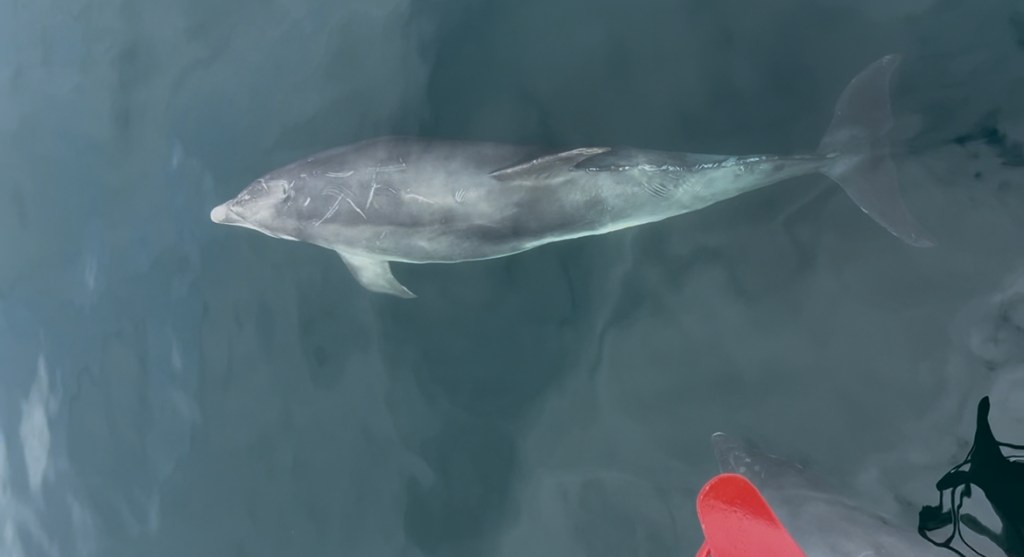
Also, I had a pod of around 15 dolphins greet me and stay riding my bow wave for over an hour. They weaved in and out in perfect synchrony, rolling onto their sides to look up at me. I could see the white flashes of their bellies underwater and the glisten of spray as they surfaced. I stood on the bow for as long as I dared, grinning like an idiot.
Port Rush to Ravedy Island
I stayed two nights in Port Rush before moving on. After a delayed start, I set sail just after 11 am and was immediately greeted by dolphins again.
There wasn’t much wind, but today felt completely different. The sun was out and it was finally getting warm 17 degrees!
I’d been a little confused about customs when entering the Republic of Ireland, but after asking friends for advice I found out we’re part of a “Common Travel Area”, which means I could complete an online form and didn’t need to arrive in any specified port to get my passport stamped.
According to tradition (and you know actual maritime law) you’re meant to fly the yellow “Q” flag until you’ve been officially cleared by customs. I didn’t have a Q flag, so I used my PPSA flag instead, which was yellow and definitely better than the yellow t-shirt I’d been considering.
It ended up being a long day. As soon as I rounded the headland and entered Lough Swilly, I was greeted by the infamous Atlantic swell, big rolling waves unlike anywhere else I’ve sailed around the UK. The swell here doesn’t break as often, the gap between each wave is bigger, but so is the height. They’re not quite mountains, but they feel like hills rising beneath you. Up north, the sea had been more like speed bumps, each one instantly slowing and jolting the boat. Here, the swell just lifts and drops you in a slow, powerful rhythm. Definitely an odd feeling when my 30ft 3 tons sailboat starts to feel like a surfboard…
I’d picked out an anchorage that was protected from the southerly wind direction, but I hadn’t considered the swell rolling in from the north. With the first anchorage unsafe, I had two choices, sail 10 nm up the river to find somewhere more sheltered, or continue on for 15 nm to Ravedy Island, which was sheltered from all directions.
I decided to continue on and arrived just before dark, dropping anchor and dropping straight to sleep.
Ravedy Island to Inishfree
The next morning I set sail around 10am and was greeted once more by the Atlantic swell. I was definitely beginning to notice the seasickness now, fine as long as I stayed on deck, so I wrapped up warm and hand-steered to give myself something to focus on.
We passed Tory Island at midday and arrived at the sheltered anchorage around 5 pm. The passage was only 30nm and, after the long day yesterday, I was glad.
I cooked my dinner and sat on deck to eat. There was a caravan site near the beach and plenty of holidaymakers around. Just as I was doing my dishes, a RIB came by. We got chatting, I told him about my trip, and I asked if he knew if I could get fuel from the fishing quay nearby. He said probably not, and when I asked where the next closest place was, he reckoned Teelin.
We chatted some more, he said he was visiting from Glasgow with his family. We waved goodbye and I thought nothing of it. Half an hour later, he motored back over and said he should have offered earlier, but would it be helpful for him to take my jerry cans and go fill them up in town?
I was so grateful. I’d been worried about how much fuel I’d been using. The last few days had been sunshine and calm seas, so I’d made great progress but mostly on the motor. He came back an hour later with 20 litres of diesel, a proper hero to me in that moment.
Inishfree to Teelin
The next day I planned to sail to Loughros More Bay. The first 10 nm were pretty sheltered, so I lifted anchor and set sail.
I passed through Owey Sound and sailed past Rosses Bay and through the Sound of Aran, absolutely stunning, and with the sun shining it just felt like the most wonderful place. I’d timed it poorly, so passing the sound took far longer than it should have, but it was sheltered and I didn’t mind too much. I even managed to cook and eat a warm meal, often unheard of at sea for me.
Once out of the sound there were a few rocks to avoid, then a nice reaching sail to Loughros More Bay. As I approached, the swell was coming in strong from the west and I began to have doubts about the suitability of this anchorage. I was here now, so I continued in hoping it would get better, and it did a little.
I dropped my sail and anchor close to shore. The swell was considerably less, but still, after just 20 minutes, my anchor was dragging. I could try again, but the same risks would apply, so I steeled myself, lifted anchor, and set sail once more.
I’d arrived at 4 in the afternoon and left an hour later. The weather was still pretty good, but the next safe anchorage was another 20 nm, around five hours on top of the sail I’d already completed.
I had tide on my side and made good speed towards Malin Headland, arriving after three hours. An hour later I passed the lighthouse and was on the final stretch. By this time the tide had turned against me and I was beating upwind. It became very slow and tedious, cold and tired, and I just wanted to be somewhere safe to sleep.
The good news was that I seemed to have finally got my sea legs, but it still took another two hours to reach Carrigan Head, my speed down to 1.5–2 knots, just painful. Huge thanks to my WhatsApp gang encouraging me and egging me on.
I eventually arrived just gone midnight and tied up to a mooring buoy.
Teelin Harbour to Killybegs
I didn’t sleep too well, woke up around 5, and couldn’t get back to sleep. Eventually I got up and took the dinghy ashore to explore. I chatted to some local fishermen who told me Carrigan Head was notorious for strong tides and big seas. Also, the mooring buoy I’d tied to in the dark wasn’t the official visitors’ mooring, I kinda knew that but had just grabbed the first one I found.
I knew I had to move the boat. I wanted to get to Killybegs, just 10 nm away, but the tide was ebbing against me from 10 am until 2 pm. On the other hand, the wind was forecast to pick up to 30 knots in the afternoon, so the sooner I left, the better, otherwise I’d be stuck here for days.
Around 11 I went to move the boat and decided I might as well peek my head out of the bay. The winds weren’t too big and, although the tide was against me, I managed a healthy 3 knots, slow but compared to yesterday’s crawl at 1 knot, it felt good.
After three hours I made it into the safety of Killybegs Harbour, a big fishing village with a marina and boatyard, grocery stores, and restaurants. The toilet and shower block was being rebuilt so I didn’t quite have the luxury of flushing toilets and warm showers, but it still felt pretty good.
A Week in Killybegs
I’d managed to time my arrival pretty well, with a storm incoming and me falling ill with my period, I very much enjoyed the comforts of a marina.
When I stepped into the Centra, the grocery store, after over a week at sea, seasick and running out of fresh food, it felt overwhelming, being surrounded by so much choice. I meant to do a proper shop for the week but instead walked out with a packet of crisps, a can of Coke, and an ice cream, and felt pretty much on top of the world. Funny the things we take for granted in everyday life.


 She sails
Leave a reply to Beverly Johnson Cancel reply