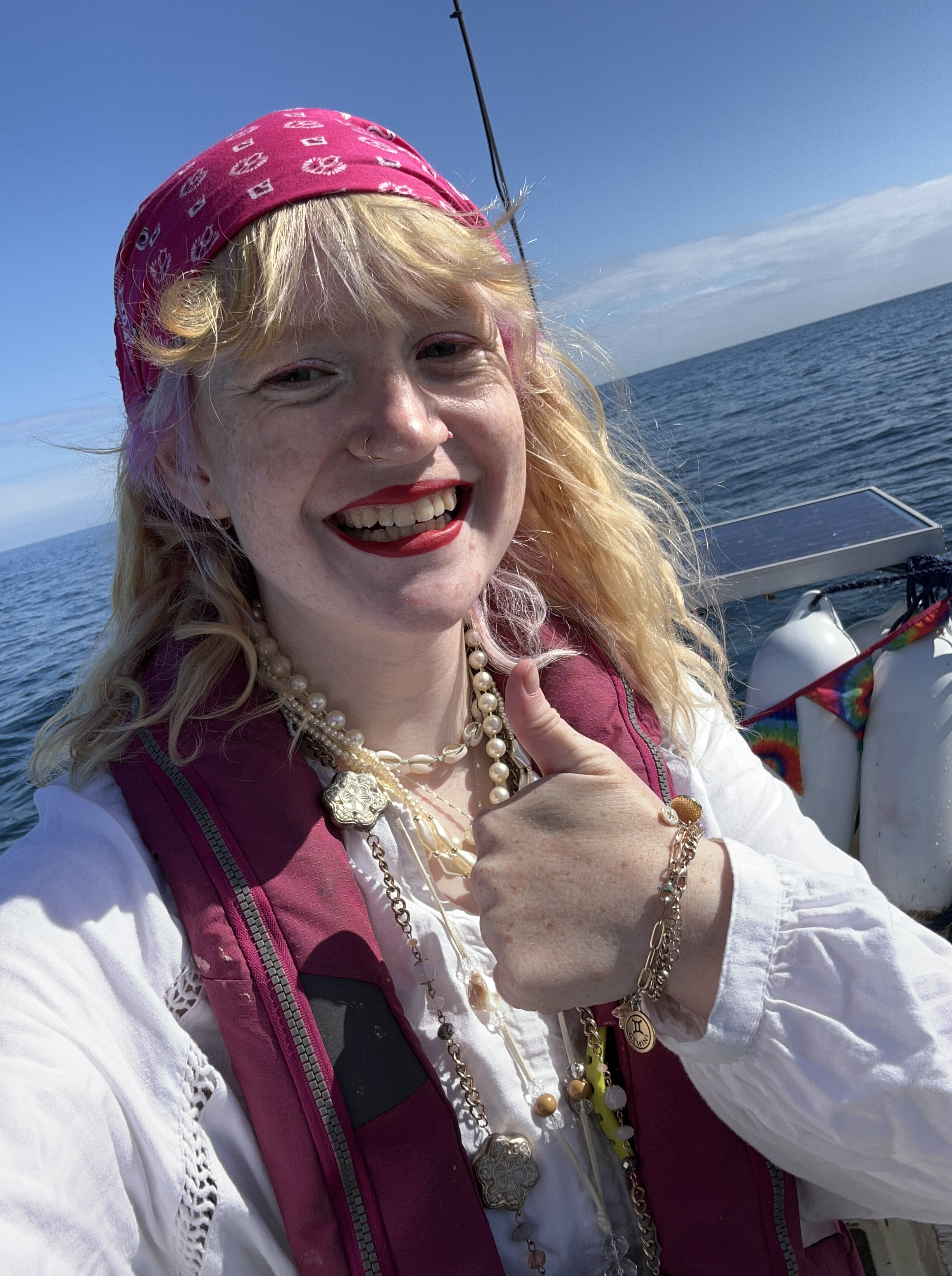
Eday → Stromness
Eday → Stromness
I left Eday at 11am, lifted the anchor, and motored out. Again, despite the lack of wind, I encountered areas of large waves caused purely by tide.
I had the tide on my side to begin with and was making almost 6 knots. But as I passed north of Rousay, the tide turned against me, and I spent several hours crawling along at just 3 knots around the northwest point of the Orkney mainland. Around 5 o’clock the tide went slack and soon turned in my favour. I picked up excellent speed down the west coast and approached Hoy Sound at 7pm.
Hoy stands tall and looks like it belongs to another country entirely — rugged and breathtaking. I passed between Hoy and mainland Orkney through Hoy Sound, which is notorious for strong currents and rough water. But on this occasion, it was flat calm, though my speed did increase to 8 knots as the tide pushed me along.
I arrived in Stromness at 8pm and tied up easily. It hadn’t been a particularly long day, but the seasickness made it feel like one. We’d had waves on the beam most of the way, which made it pretty uncomfortable. The waves weren’t that big, and they were rolling rather than choppy, so it wasn’t a safety issue — just a bit relentless.
The weather wasn’t bad, but I decided to stay a few days anyway. I needed a bit of rest and wanted to see Stromness, which turned out to be even more picturesque than Kirkwall.
I made friends with my neighbour, Alan, and he invited me over for tea. We sat and talked for hours. I told him about my journey so far, and he shared stories of Atlantic crossings and Arctic adventures. He was headed for the Faroe Islands that night — around 250nm from Orkney, so just two or three days of continuous sailing, then on to Iceland and Greenland. I was a little in awe.
That evening, I sat in my cabin feeling a lot of things. Proud of how far I’ve come. Tired. A bit seasick still.
And then Alan knocked on my cabin.
He said he’d read my blog and was impressed. He asked if there was anything I needed for the boat — not really, I said. He listed a bunch of safety kit, most of which I already had. Then he said, “Wait there, I’ll be right back,” and returned with a handheld, battery-powered GPS device — perfect for emergencies. He told me he’d had it for nearly 30 years but rarely used it anymore. I was touched. I thanked him again and again. He left that night.
A couple of days later, I got a notification saying he had donated £500 to my GoFundMe. WTF. I sent him a thank you, but I honestly didn’t know how to respond.
It wasn’t just the money — it was this total stranger, totally believing in me. I’m so grateful to every single person who has ever supported me, big or small, emotionally or financially. But this just hit me at a time when I really needed it.
When I posted Weathering a Different Storm I didn’t know what to expect — but I had over 50 comments and private messages of support and solidarity. That page on my website has had over 800 views. It utterly blew me away. I really can’t find the words to describe how much this online support makes me feel. And it helps.
I hope that by writing and sharing this journey — the honest bits, the messy bits, the moments of magic and doubt — I can give something back. That maybe, in some small way, my story helps someone else feel less alone, too.
Stromness → Kyle of Tongue
I left Stromness a few days later on the 10th of June. The weather was forecast for 8 to 10 knots from the north, so I was expecting easy sailing. I motored out of Stromness smoothly and approached Hoy Sound. The wind was light, but it was wind against tide, which meant rougher seas. As soon as I entered the sound, I was swept along at speed with the tide, my boat speed reaching 10 knots.
Ahead, I could see white horses and rough water. I was in it now – no turning back. I tried to reach the southern side, where the sea state wasn’t quite as bad, but I was too slow. All I could do was hold on and hand-steer while Pink Delta was thrown about by the waves. Ten minutes later, I broke free to the south, back into calm water, and motored at a steady 6 knots.
Half an hour later, I was past the northern headland of Hoy and beginning to turn south. I pulled the sails up and set the autohelm to steer towards my next chosen anchorage: the Kyle of Tongue, on the north coast of mainland Scotland near Cape Wrath.
The day had started out wet and raining, but it cleared up. Before Orkney, I’d never seen tidal waves quite like that — if that’s even the proper name for them. They’re different from normal swell; they’re confined to a specific area and don’t seem to travel. In Hoy Sound, I could move just 100 metres and go from waves of nearly two metres to calm water. It was strange and a little unnerving. But it also meant I could use my binoculars to scout for the whitewater and steer around it — not something I’d ever needed to do before on this UK voyage. Coming from Pembrokeshire and having sailed many times on the River Severn, I thought I understood tide. This was something else entirely.
I was starting to get my sea legs. I could move around the boat easily now and stay below deck for up to an hour at a time without feeling too queasy. I was settling into the rhythm of sailing. When the sun came out and I caught sight of the mountains of the Scottish Highlands, it hit me how far I’d come. I was finally on my way and making progress.
I arrived nine hours later at around 9:30pm. I dropped anchor by a couple of rocks called the Bunny Ears — more like small islands, really. At low tide, they were connected by a beautiful white sandy beach. With the Highlands as a backdrop, it was utterly idyllic.
Rounding Cape Wrath: Kyle of Tongue → Kinlochbervie
A lot of boats stop in Loch Eriboll before rounding Cape Wrath, but I chose Tongue because it cut about 10 miles off the day before — and I was running out of daylight. Today’s route was around 20 nautical miles to the cape, then another 15 to the nearest anchorage: Kinlochbervie. (Glad I didn’t need to say that one over the radio.)
The day was calm and sunny again, with not much wind for sailing. I lifted the anchor and motored for the first three hours. Luckily, the wind filled in just as I was reaching the cape. I’d been following another vessel that had stopped in Eriboll the night before, and it reassured me to have someone nearby.
Cape Wrath sounds ominous — like the gods are angry and the sea would be wild. But a local had reassured me that the name actually comes from Old Norse, simply meaning “turning point.” A left-hand turn sounds far less scary than “Cape Wrath.”
Conditions were flat calm. It reminded me of rounding Land’s End last year in similar weather. Everything went smoothly. The most exciting thing that happened was a puffin landing a metre away from me on my solar panel — though it flew off before I could get a photo. There were hundreds of puffins all around and did you know a baby puffin is called a puffling!
After the cape, it was another three hours to the anchorage. My seasickness had completely gone by now, and I went below to cook dinner. The day had been warm and calm, and for the first time in a while, I truly enjoyed the sailing — actually felt comfortable. Being able to go below, cook a meal, and eat it without feeling sick was a big win. So was Cape Wrath. But life is about the small wins as well as the big.
Cape Wrath felt like a milestone. It was the point where I truly started sailing home — heading south and west. A big moment. A big achievement.
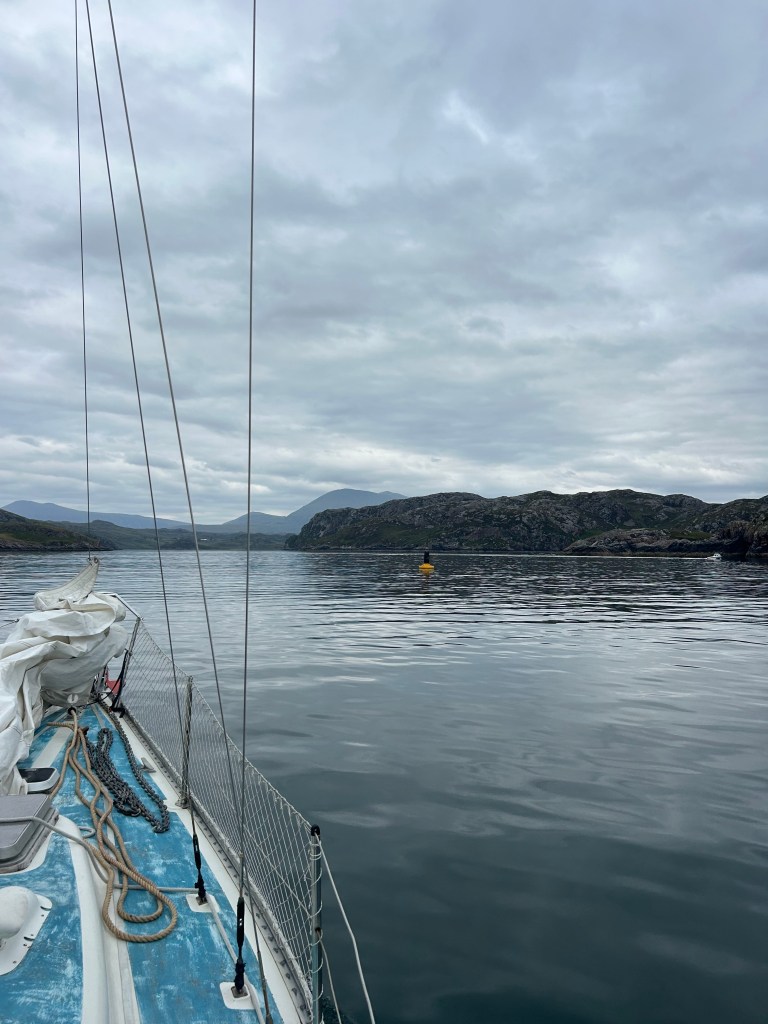
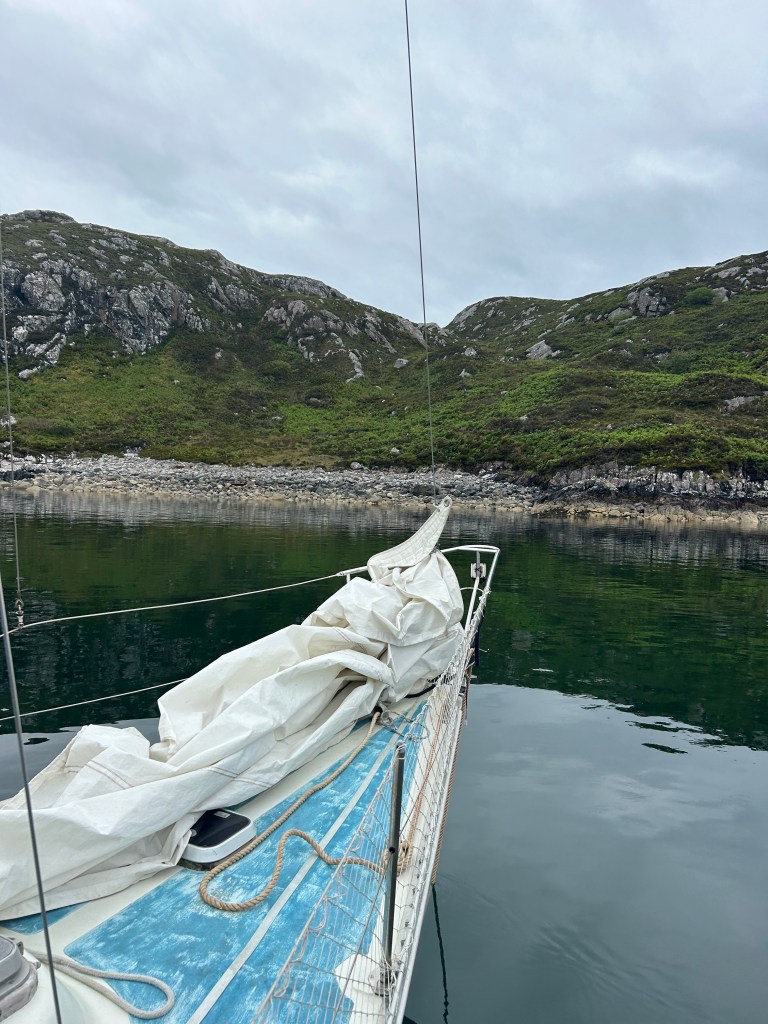
When I arrived at the anchorage, it was small and full of pot buoys. I tentatively motored in and found a spot I was comfortable with. I dropped anchor and put the boat to bed. Then I paddled ashore in the dinghy to stretch my legs and go for a walk.
I felt like I’d achieved something today.
Kinlochbervie → Stornoway
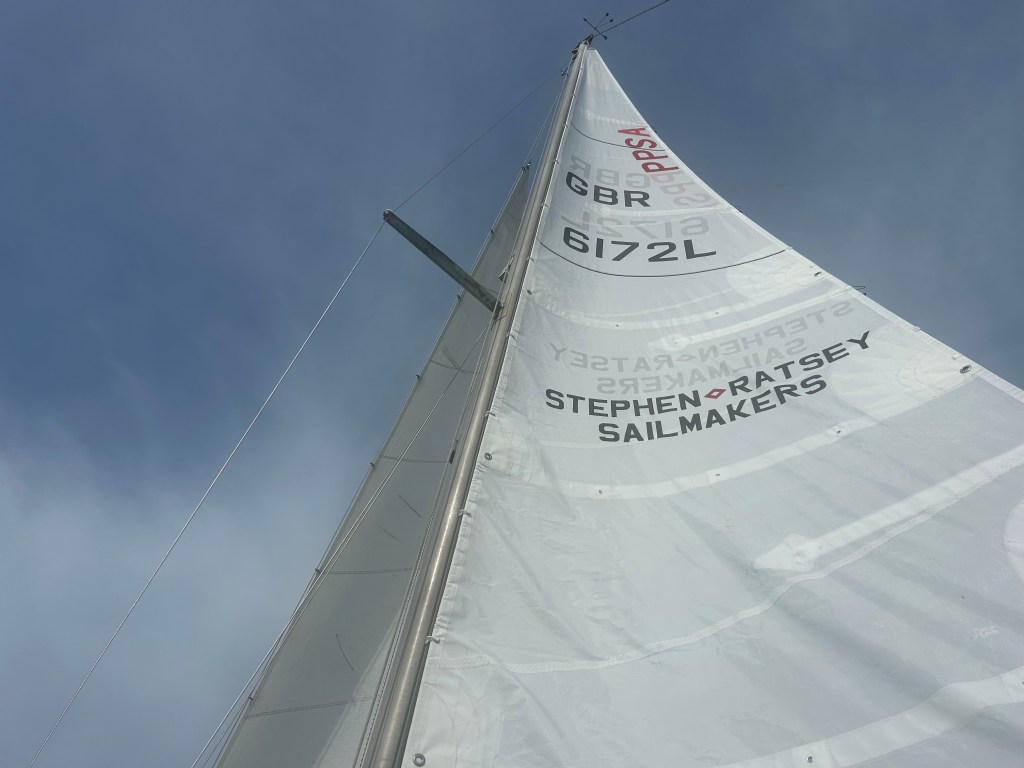
The next day, I spent a bit of time sorting out my mainsail — a few adjustments that were easier with the sail down. The forecast was for 15–20 knots from the southeast, rising to almost 30 knots in the evening. I considered putting in reefs beforehand but decided against it. I raised the sail and had it looking much better.
Then came lifting the anchor — always a slow, hard job without a windlass. What I hadn’t factored in was that as soon as the anchor was off the ground, the boat started sailing. I tied it off, rushed back to get her head to wind, and tried again. Normally not a big issue, but this was a very small anchorage and the cliffs weren’t far off. It was a bit scary, but I managed it — got us back on course out the loch, then stowed the anchor properly.
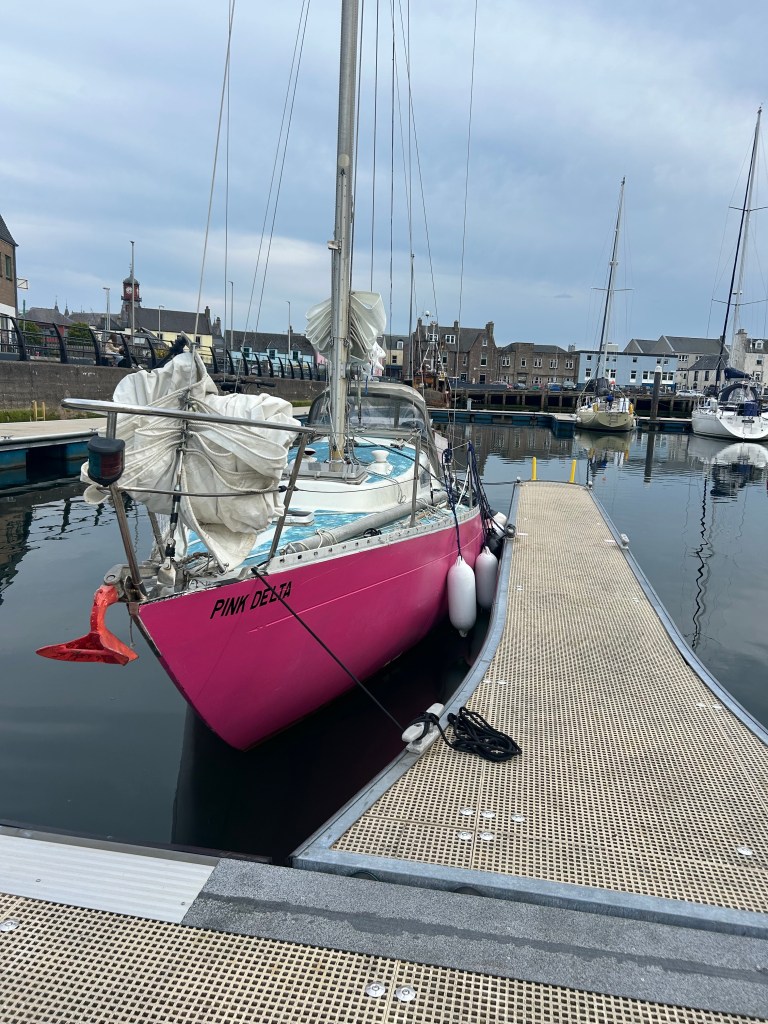
Some of you might have noticed my anchor is painted red — because apparently they don’t sell pink Hammerite? — but it’s actually really useful to have such a visible anchor, especially in the clear waters up north.
Anyway — getting off track. Once out of the loch, the wind filled in and I turned off the engine. Best feeling. I was determined to sail, but the weather had other ideas. After about three hours of doing 2.5–3 knots, I gave in and turned the motor back on. I don’t like doing it — it’s loud, uses up diesel, and feels a bit like cheating (dinghy racer brain). But the truth is, sometimes you just have to. Whether it’s catching a tide or just making life easier. And if it makes my journey smoother or happier, I’ll do it. Still — not a huge fan of the iron sail.
It was another gorgeous day. The mountains behind me were snow-capped, but the forecast said 20°C. So I sat on the bow in joggers and a t-shirt (and, of course, my lifejacket). The wind dropped even more as the day went on. I wrapped myself in a blanket, played Disney songs, and watched the islands go by.
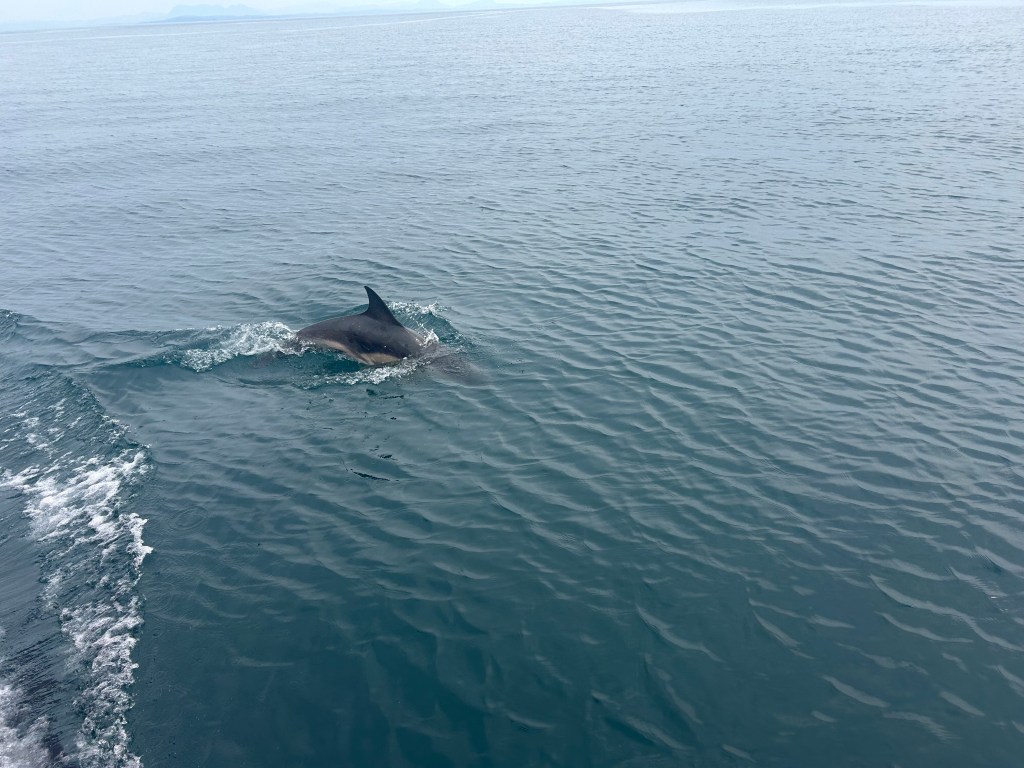
Mid-afternoon, I heard a high-pitched squeaking sound coming from the bow — not your usual boat noise. I looked forward and saw a dolphin, right there. Seconds later, two more joined in, playing in my bow wave. I love watching them — they make you smile no matter what. I even managed a few pictures. They stayed for maybe half an hour, but the joy they brought definitely lingered.
I could clearly make out the Isle of Lewis now, though I still had 15 nautical miles to go.
I arrived in Stornoway around 6pm. The harbour authorities I’d spoken to on the radio sent someone from the marina to catch my lines and help me tie up. He was super friendly, took my details, gave me an information pack, and said I could stay as long as I wanted. It wasn’t until I stepped off the boat that I noticed how tall he was — well over 6ft and towering above me. We both laughed.
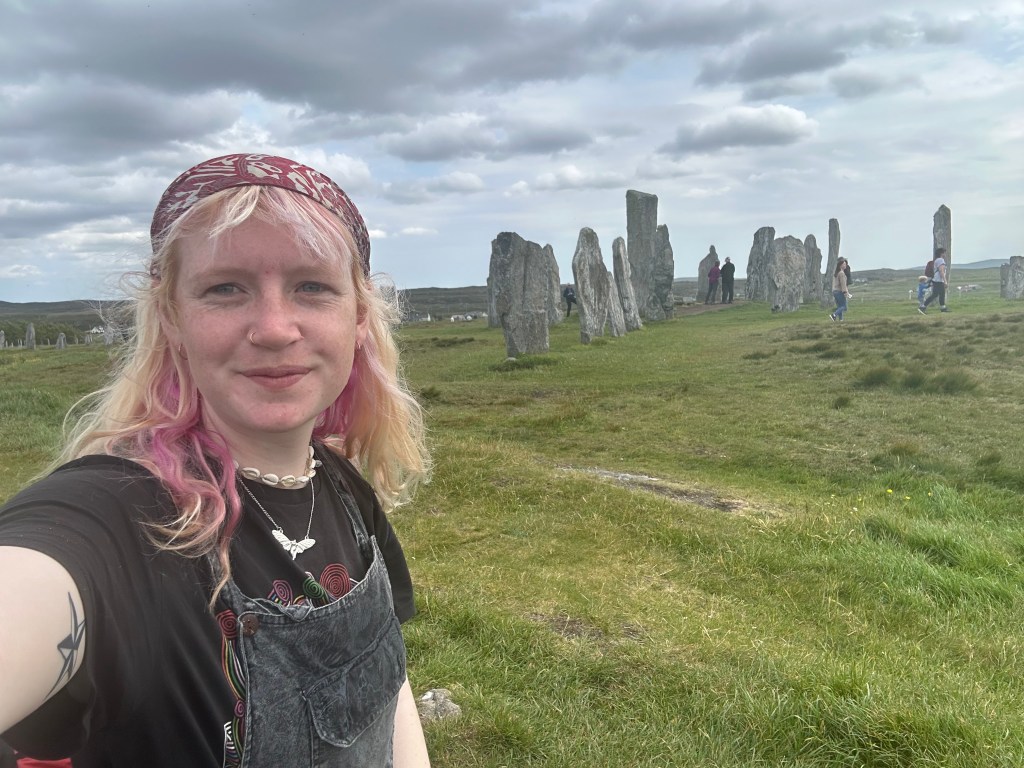
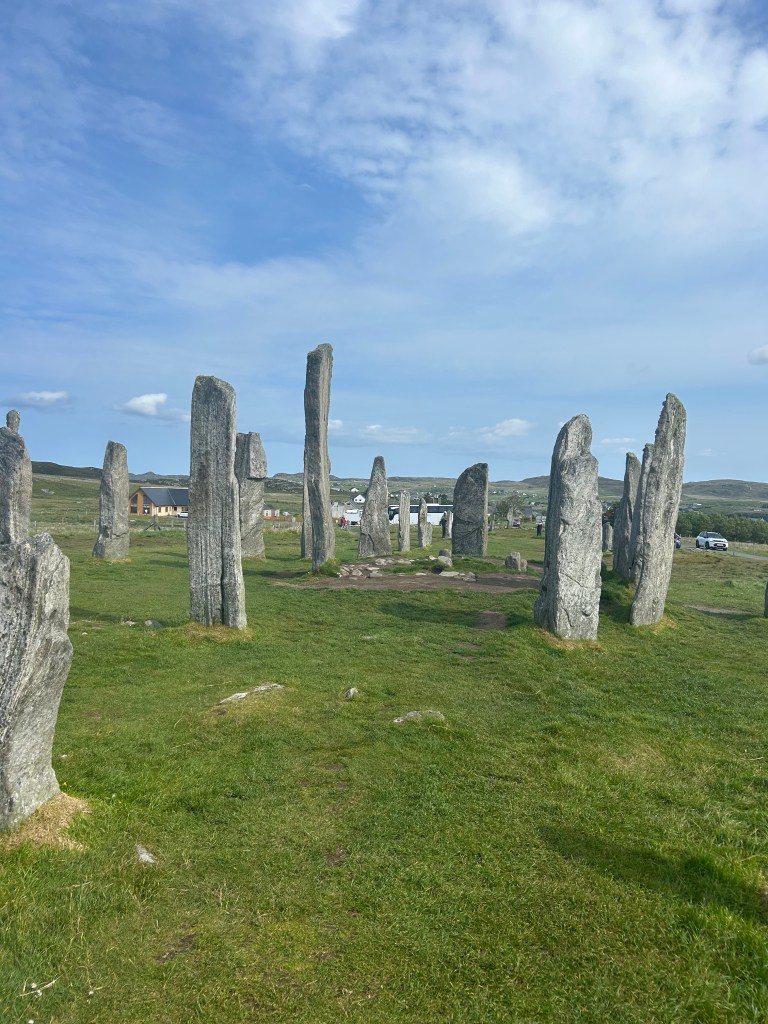
After a few long sailing days and almost 200nm, I needed a proper rest. I really wanted to see the standing stones at Calanish — and I did, on Saturday.
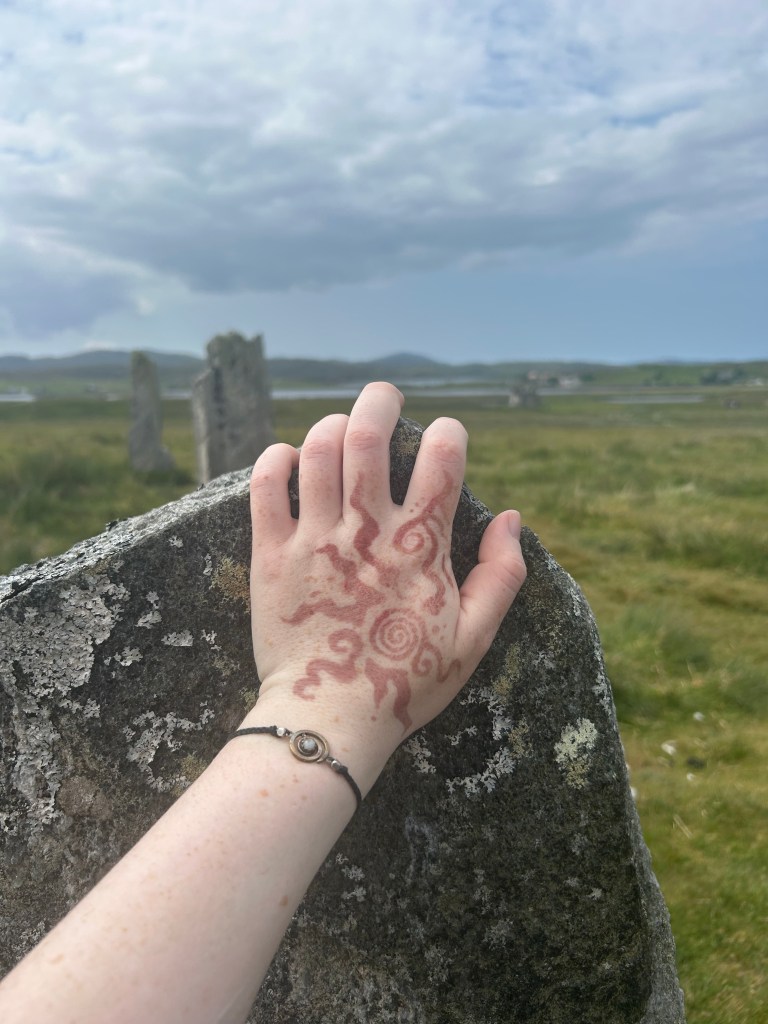
I’d arrived Thursday evening and had good weather Friday and Saturday, so I could’ve pushed on. But I chose rest and exploring instead. The Calanish stones are thousands of years old — built over a rare geological phenomenon that attracts lightning. The centre of the circle has apparently been struck over 30 times. It even causes compass variations in the surrounding seas. The rocks’ high metal content can throw off compasses — dangerous for ships, especially in fog or poor visibility.
It really felt like stepping back in time. A place where GPS fails, compasses misbehave, and even the land and people feel a bit out of time. Everything was closed on Sunday. Buses run three times a day. And somehow, I feel at home on these islands.
I love it.



 She sails
Leave a reply to Richard Wardner Cancel reply