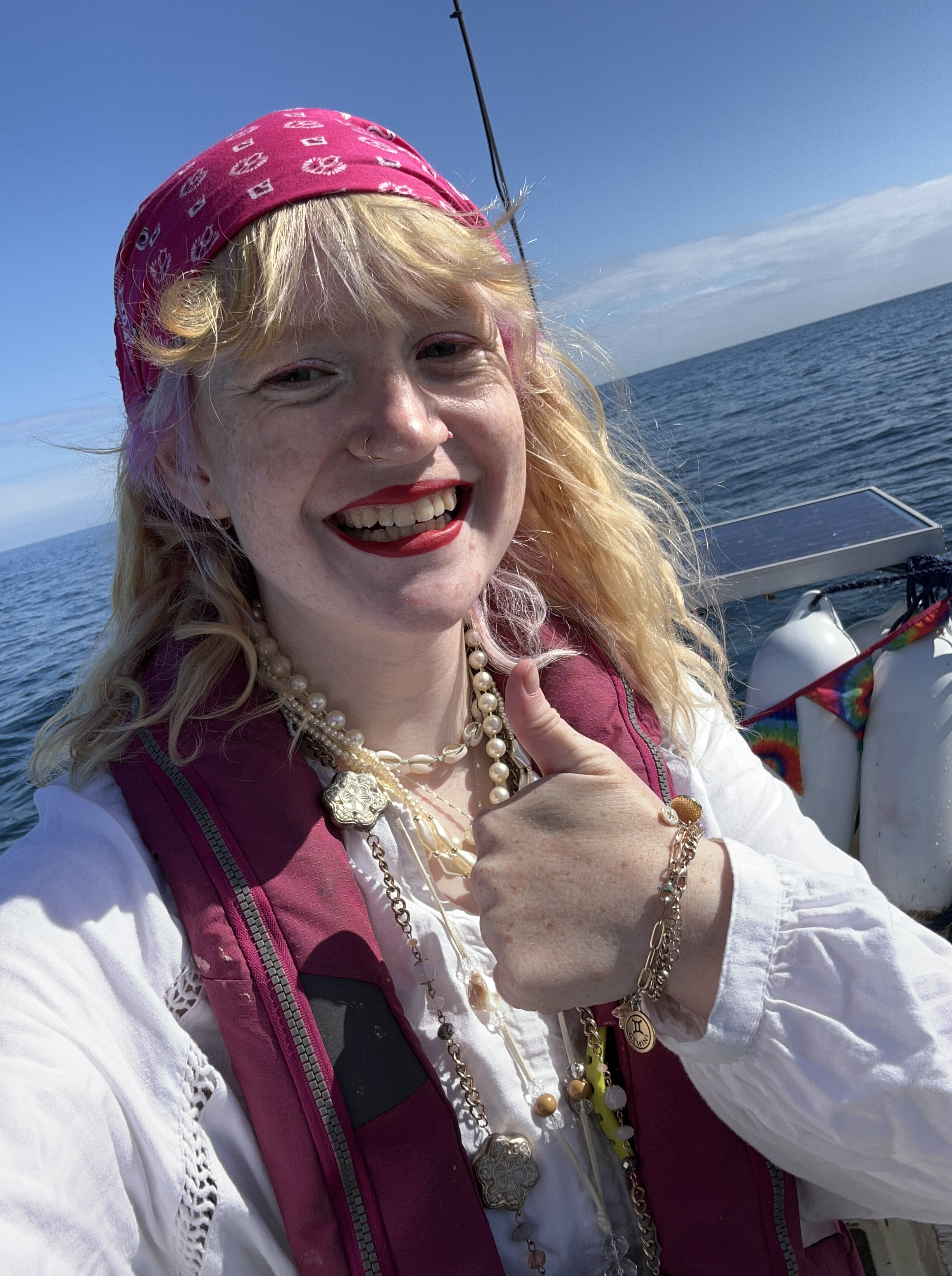
After two weeks of boat prep in Peterhead, it was finally time. I’d done a couple of short shakedown sails around the harbour, but this was it—the first real trip of the summer.
I was heading north and had two choices: hug the coastline for a shorter crossing from Whitehills, or go straight for Wick. The coastal route would mean 40 miles to Whitehills, then another 50 to Wick. But a direct passage from Peterhead was 70 nautical miles. I chose the longer option.
The wind was forecast to be southerly, veering later, Force 3 to 5 on the Beaufort scale—not perfect, but probably the best I was going to get. And honestly, I had itchy feet. I just wanted to go.
A Very Early Start
Because of the distance, I planned to leave on the morning high tide—around 4:30am—along with two other boats. I set my alarm for 3:30, woke up groggy but determined, made some porridge, and started getting ready. I knew it was going to be a long day and it’s hard to make warm food at sea, so I made a hot water bottle too.
What I hadn’t factored in was how much mess I’d made living onboard while prepping the boat. Cleaning, packing up, getting the dinghy and my bike stowed—all of it took longer than I expected. By the time everything was sorted, it was nearly 5am.
Huge shoutout to Brett, a friend I made in Peterhead, who got up ridiculously early to help me clear up, get the sails ready, and even brought me a hot chocolate. That kind of kindness makes a big difference on mornings like that.
New Mainsail, Same Boat
I’d just installed my brand new mainsail—thanks to Ratseys Sailmakers in Neyland for the support. When I arrived in Peterhead last November, I’d torn the old one badly, and the UV damage to the seams meant it was definitely time for a replacement.
The new sail looked amazing—crisp, clean, and honestly made the rest of the boat look scruffy. But it was ready to go, and so was I.
Underway at Last
I motored out of Peterhead Harbour around 5:30am. Once clear of the headland, I turned into the wind and raised the sails. The sea was lumpy, which made things difficult, and it took a good half hour to get the mainsail and headsail properly up.
But then came the magic moment—turning downwind, sails filling, and everything going quiet except the rush of water. I was flying, doing 8 to 9 knots over the ground with the tide behind me.
Reefing, Rolling, and Wind Farms
A couple of hours in, the wind began to build. I decided it was time to reef, so I turned into the wind and dropped the mainsail to put two reefs in. It was hard work—my arms were already tired, and I realised I should have done it earlier.
I was flying the No. 3 headsail, which is smaller and better suited to stronger conditions. (For context: I have four headsails. No. 1 is tiny—a storm sail. No. 4 is massive, for light airs and downwind use.) With two reefs and the No. 3 headsail, the boat felt balanced and manageable, even if I lost a knot of speed.
I tucked up with a hot water bottle and my dryrobe and got back to sailing.
The wind was behind me, which meant we were rolling a lot. I felt fine on deck, but being below for too long made me seasick.
Around 8am, I noticed I was on a collision course with a large vessel moving fast. As a sailing vessel, I was the stand-on vessel, but I wasn’t confident they’d seen me, so I gybed onto a safer course. It went smoothly, and the new heading took me on a direct course for Smith Bank wind farm.
Fading Wind, Slow Progress
I stayed on that course for about five hours. The wind gradually dropped to a Force 3, and around 1pm I turned into the wind again to shake out both reefs. I was now close-hauled, sailing upwind with the tide against me—progress was slow.
The wind continued to clock around, and soon I was only making about 2 knots and heading 50 degrees off my intended course. Still, I was moving.
By 3pm, things had taken a turn. The wind picked up again—Force 4 to 5—and the sea state worsened. I was tired, seasick, and struggling. My iron levels were low and I was running on little sleep.
I knew I needed to reef again, and once more turned into the wind to do it. It was a battle. My body ached and every wave knocked the boat around. I got two reefs back in and kept the small headsail up, but the motion was relentless. Every time I hit a wave, I lost momentum. I felt like I was making no progress at all.
The worst part? I could still see the wind farm I’d been aiming for hours ago. That’s how slow things had gotten.
Autopilot Drama and Holding On
To make things harder, the autopilot started struggling. The constant motion and confused seas meant it couldn’t keep hold of the tiller. I’d be down below trying to warm up or rest, hear the sound of it slipping, and have to dash on deck to reattach it. If I didn’t get there in time, the boat would spin up into the wind and stop completely. It was just one more thing on a long list of things to deal with.
I don’t know what I would’ve done without my Garmin InReach. I used it to keep in touch with family, and more importantly, to get updated weather forecasts. What I hadn’t realised when I installed it was that it needs direct access to the sky—so I could only use it on deck, and even then it could take a while to get satellite coverage. But it worked. And the latest forecast was a lifeline: the wind was due to drop from Force 6 to Force 2 by nightfall. Just hold on.
It was a mental game rather than anything physical. There wasn’t much to do on the boat, I just needed to survive the next six hours until better weather. So I set a one-hour timer on my phone, told myself just get through the next hour—that’s all you have to do—and I did.
Singing out loud helps. It breaks the silence. It makes me feel less alone. I’m no singer, but silly Disney songs I know all the words to, or Ed Sheeran, Taylor Swift, all the artists I grew up with—hearing their voices gave me something to focus on. It’s a way to feel connected even when you’re completely alone.
The Turnaround
Finally, around 9pm, I was approaching Smith Bank wind farm again. The wind dropped. The waves eased. I was able to turn on the engine and go forward to drop the headsail. Just as I did, a wave crashed over me and soaked through every layer I had on. But I didn’t care—because I was moving again.
Instead of crawling at 2 knots in kinda the wrong direction, I was now doing 4 knots, heading exactly where I needed to go.
The clouds began to lift. I could see the coastline in the distance. My mood changed completely. Wick was still 15 miles away, but for the first time all day, it felt possible.
The sea state continued to ease as I motored onwards, and by 11:30pm, I got phone signal. I rang my mum—hearing her voice made me cry.
By midnight I was nearing the entrance to Wick. I went forward to drop the mainsail, then got lines and fenders ready. My hands were shaking, I was soaking wet, and everything on the boat was damp and salty—but I was almost there. The entrance to the harbour was simple and well lit, and by 1am I was tied up safely alongside in the marina.
Reflection
I stood at the marina, shivering, the boat a mess—but so fucking proud of myself. Proud that I got there. Proud that I didn’t give up. Proud that I kept going. That I survived.
Nineteen hours. Ninety nautical miles. It wasn’t my longest passage, and it wasn’t the worst weather. But all together—the lack of sleep, the seasickness—it was the hardest leg I’ve ever done.
I didn’t enjoy it.
But I’m glad I did it.
Because it reminded me: even when things get tough, I get tougher.
Next Stop: Orkney (Hopefully)
If all goes well, Orkney’s next. I’m hoping to make the crossing in the next few days and celebrate my birthday—June 5th—somewhere rugged and windswept, somewhere far from it all. A reminder of why I chose this life in the first place.
Not everyone’s idea of a celebration—but it’s mine.
If you’re enjoying the journey (or just feel a bit sorry for seasick, soaked me), here’s my GoFundMe. Every share or donation means the world.
And to every single person who’s donated recently or in the past—thank you. Truly. I wouldn’t be living this dream without you. Your support is what gets me through the hardest miles, the longest nights, and the days when I question everything. I carry you with me, every sail, every crossing. Thank you for believing in me.
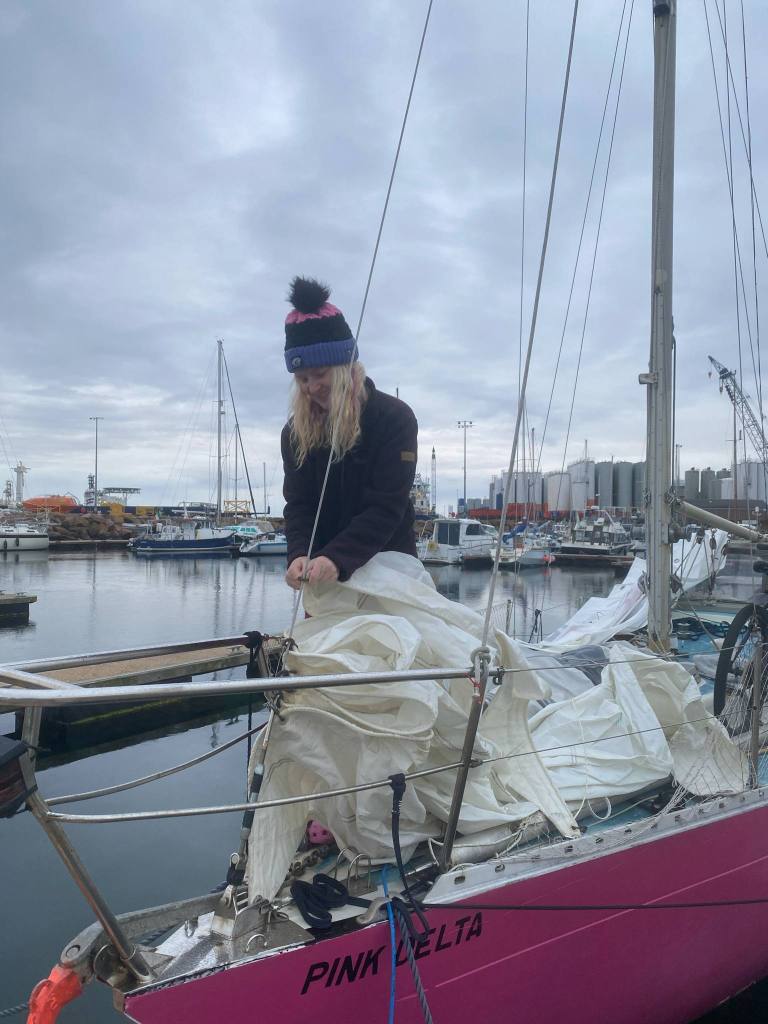


 She sails
Leave a comment